
Are Mushroom Spores Legal? Complete Guide to Spore Laws in the US, Canada & Worldwide
Legal disclaimer: This article is for informational purposes only and does not constitute legal advice. Spore laws can change. If you need guidance specific to your situation, consult a qualified legal professional in your jurisdiction.
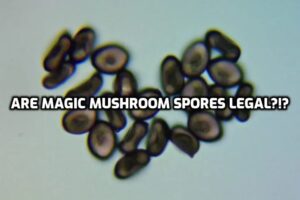
The Short Answer: Yes, Mushroom Spores Are Legal in Most Places
Yes, mushroom spores are legal to buy in most places. Psilocybin mushroom spores contain no psilocybin or psilocin — the compounds that are actually controlled substances. In the United States, mushroom spores are legal in 47 out of 50 states. The three exceptions are California, Idaho, and Georgia. In Canada, mushroom spores are legal to purchase and possess for microscopy research.
Because the spores themselves carry none of the psychoactive compounds that drug laws target, they exist in a distinct legal category from the mature mushrooms that produce them. This distinction is backed by science, and it is the foundation of the entire legal spore market.
That said, the legal landscape around psilocybin is changing fast. Oregon, Colorado, and a growing number of cities have introduced decriminalization or regulated therapeutic frameworks. Understanding where spore laws stand today — and where they are headed — matters whether you are a seasoned microscopist or just getting started with mushroom spore research.
Why Are Mushroom Spores Legal?
The legal status of mushroom spores comes down to a straightforward fact: spores do not contain psilocybin or psilocin.
Drug scheduling laws — whether at the federal level in the US, under Canada’s Controlled Drugs and Substances Act, or under international treaties like the UN Convention on Psychotropic Substances — target specific chemical compounds. Psilocybin and psilocin are the scheduled substances. Since mushroom spores contain neither, they fall outside the scope of these laws in most jurisdictions.
Think of it this way: the spore is a reproductive cell, much like a seed. The controlled compounds only develop later in the organism’s life cycle, well after the spore stage. This is not just a legal argument — it is a scientific one, supported by laboratory analysis.
For anyone curious about what mushroom spores actually are and why they fascinate researchers, the legal clarity around them is one reason the microscopy community has been able to grow openly.
The Science: When Does Psilocybin Appear in the Mushroom Life Cycle?
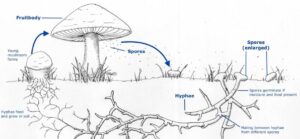
One of the most important studies on this topic was conducted by forensic scientist Susan T. Gross (Gross, 2000), who tested for the presence of psychoactive compounds at each stage of the mushroom life cycle:
The four stages of mushroom development:
- Spores — The reproductive cells that initiate the life cycle. They require a suitable environment to germinate.
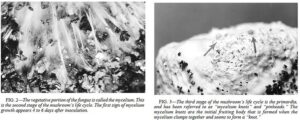
- Mycelium — Once spores germinate, they grow outward in a branching, web-like network that collects nutrients. This structure is visually similar to how neural dendrites or tree roots branch and spread.
- Primordia (knots/pinheads) — Small formations that represent the earliest stage of fruiting body development.
- Fruiting bodies — The mature mushrooms that produce and release new spores, completing the cycle.
What the Gross study found:
| Development Stage | Psilocybin/Psilocin Detected? |
|---|---|
| Spore solutions | No — none detected in any sample |
| Mycelium (29 samples, pre-primordia) | No — none detected in any sample |
| Primordia/knots (22 samples) | Yes — 17 of 22 samples showed psilocin |
| Mature fruiting bodies | Yes — compounds detected |
The study determined that the primordia (knot) stage was the earliest point at which psychoactive compounds could be detected. This means spores and pre-primordia mycelium are verifiably free of the controlled substances, which is why studying spores under a microscope is a legal activity in most places.
Mushroom Spore Laws in the United States
At the federal level, psilocybin is classified as a Schedule I controlled substance by the DEA. However, because mushroom spores do not contain psilocybin or psilocin, they are not scheduled under federal law. This means spores are legal in 47 out of 50 states for microscopy and research purposes.
Three States With Restrictions
- California — Possessing spores with intent to produce a controlled substance is illegal. California’s Health and Safety Code Section 11054 is sometimes interpreted broadly, making spore sales to California a grey area most vendors avoid.
- Idaho — Has some of the strictest language in the country. Idaho law explicitly includes spores in its definition of controlled substances related to psilocybin mushrooms.
- Georgia — Bans the possession of psilocybin-related materials in a way that has been interpreted to include spores.
The Decriminalization Movement
The legal landscape is shifting. Several jurisdictions have moved to decriminalize or create regulated access to psilocybin:
- Oregon — Measure 109 (passed 2020, services launched 2023) created a regulated framework for psilocybin-assisted therapy, making Oregon the first state with a legal therapeutic program.
- Colorado — The Natural Medicine Health Act (Proposition 122, passed 2022) decriminalized psilocybin for personal use and established a pathway for regulated therapeutic access.
- City-level decriminalization — Denver, Oakland, Santa Cruz, Ann Arbor, Washington D.C., Seattle, and other cities have deprioritized enforcement of psilocybin laws.
These changes apply to the mushrooms and compounds themselves — spores were already legal in these jurisdictions (except where noted above). But the broader movement reflects a shifting regulatory attitude that has made the legal status of spores even more settled.
Mushroom Spore Laws in Canada
In Canada, psilocybin and psilocin are Schedule III substances under the Controlled Drugs and Substances Act (CDSA). However, spores are not specifically mentioned in the Act.
As Health Canada’s page on psilocybin states, the controlled substances are psilocybin and psilocin themselves. Since spores contain neither compound, purchasing and possessing mushroom spores for microscopy research is legal in Canada.
Canada has also been at the forefront of psilocybin research access. Health Canada has granted exemptions under Section 56 of the CDSA for therapeutic and research purposes, and several clinical trials are currently active across the country. This progressive research environment has supported a well-established community of mycologists and microscopy researchers.
For researchers ordering from a Canadian vendor like Spores Worldwide, this means straightforward domestic shipping across all provinces and territories, with no legal ambiguity around spore purchases intended for microscopy study.
International Mushroom Spore Laws
The general principle internationally is the same: most countries regulate the psychoactive compounds (psilocybin and psilocin), not the spores themselves.
| Jurisdiction | Spore Legality | Notes |
|---|---|---|
| United States (47 states) | Legal | For microscopy research; CA, ID, GA restricted |
| Canada | Legal | Spores not mentioned in CDSA |
| United Kingdom | Legal | Spores not controlled; fresh/dried mushrooms are |
| Netherlands | Legal | Spores and psilocybin truffles both legal |
| Germany | Legal | Spores legal; mushrooms controlled |
| Australia | Restricted | Varies by state/territory; generally more restrictive |
| Japan | Restricted | Spores specifically banned since 2002 |
| Brazil | Legal | Psilocybin mushrooms exist in a legal grey area |
Keep in mind that laws change. Always verify the current regulations in your specific country or region before ordering. International shipping is subject to customs and import regulations that vary widely.
Where to Buy Legal Mushroom Spores for Microscopy
If you are looking to purchase spores for microscopy research, there are a few things worth considering when choosing a vendor:
Quality and sterile technique matter. Spore products prepared in unclean environments can arrive contaminated, which defeats the purpose if you are trying to study clean spore samples under a microscope. Look for vendors that prepare their products in HEPA-filtered cleanroom environments.
Product variety. A good vendor carries multiple formats — spore syringes, spore prints, and spore swabs — so you can choose the format that suits your microscopy setup. Some vendors also offer liquid cultures for more advanced research.
Clear microscopy positioning. Reputable vendors sell spores explicitly for microscopy and research purposes. This is not just good practice — it reflects the legal framework that makes the entire spore market possible.
At Spores Worldwide, we ship from Canada and offer over 30 varieties of Psilocybe cubensis spores prepared in our HEPA-filtered cleanroom. Whether you are starting with a classic strain like Golden Teacher or studying something with more distinctive morphology like Penis Envy, every product is prepared for clean, reliable microscopy slides.
Frequently Asked Questions
Are mushroom spores legal in Canada?
Yes. Mushroom spores are legal to buy and possess in Canada for microscopy research. Psilocybin and psilocin are Schedule III substances under the Controlled Drugs and Substances Act, but spores contain neither compound and are not specifically mentioned in the legislation. Canadian researchers can order spore products — including spore syringes, prints, and swabs — without legal concern.
Can I buy mushroom spores in California?
California is one of three US states where psilocybin mushroom spores are restricted. California law prohibits possession of spores with intent to produce a controlled substance. Because of this broad language, most reputable spore vendors — including Spores Worldwide — do not ship to California. Idaho and Georgia have similar restrictions.
Do mushroom spores contain psilocybin?
No. Scientific research, including a forensic study by Susan T. Gross, has confirmed that mushroom spores contain no detectable psilocybin or psilocin. These controlled substances only become detectable at the primordia (mushroom knot) stage of development, well after the spore stage. This is the primary reason spores are legal in most jurisdictions.
Is it legal to look at spores under a microscope?
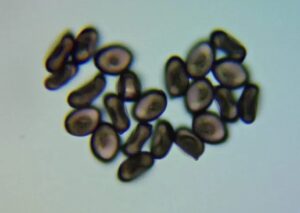
Yes. Studying mushroom spores under a microscope for research and educational purposes is legal in most jurisdictions. Spores contain no controlled substances, and microscopy is the primary legal use case for purchasing mushroom spore syringes, prints, and swabs. Many amateur mycologists and students use spore microscopy to study fungal taxonomy and morphology.
What is the difference between spores and mushrooms legally?
Legally, mushroom spores and mature mushrooms are treated very differently. Spores contain no psilocybin or psilocin and are legal in most places. Mature psilocybin mushrooms (fruiting bodies) contain controlled substances and are illegal in most jurisdictions without specific authorization, such as Oregon’s regulated therapeutic program or Health Canada research exemptions. Understanding this distinction is key — it is the reason the legal spore market exists.
Ready to Start Your Research?
Browse our full collection of premium microscopy-grade spore products, prepared in our HEPA-filtered cleanroom and shipped from Canada:
- Shop Spore Syringes → — 27 P. cubensis varieties
- Shop Spore Prints → — 5 popular strains
- Shop Spore Swabs → — Rare and exotic varieties
- Shop Liquid Cultures → — Coming soon
New to spore microscopy? Start with our guide: How to Use a Spore Syringe for Microscopy →
Related Reading:
– What Are Golden Teacher Mushrooms?